





Understanding Luke 8:26-39: A Bible Study on The Demon-Possessed Man
“We are who we pretend to be, so we must be careful about what we pretend to be.”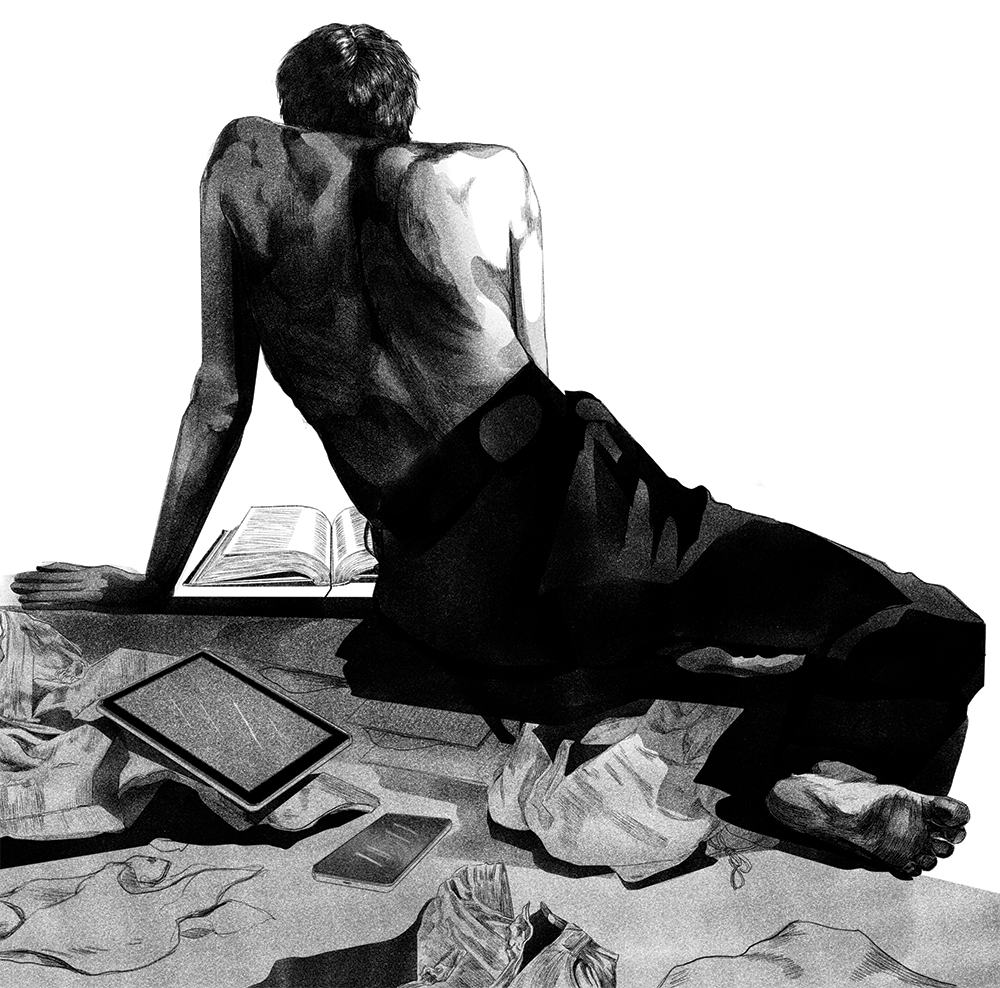
Most of us have carefully cultivated online narratives in which we present to the world only the images and messages we choose. In a strange twist, the algorithms of social media then reflect back to us the content that will perpetuate and magnify that very image. Anyone with a cellphone knows precisely how this works. I start looking up articles on the Gospel of Luke to prepare for a sermon on chapter eight, and all of a sudden, my phone is suggesting recipes for pork chops and little red devil costumes for Halloween.
Many young people have embraced this sort of thinking. For them, staging, editing, and posting selfies with hashtags that identify them with a group, or a way of life, has become an obsession. This generation has a label, a sticker, and a style for everyone. They even have a TikTok or YouTube video, which they will send you via multiple apps and message systems to explain just which flag, label, style, or sticker describes you. This deconstruction and reconstruction of identity apply not just to hobbies, but to our deepest relationships, and even to the ultimate label — the name we call ourselves.
The character at the center of the story we are looking at today is a person with no name but a bunch of labels. Luke 8:27 says, “And when [Jesus] stepped out onto the land, a man from the city met Him who was possessed with demons; and he had not put on clothing for a long time and was not living in a house, but among the tombs” (NASB). The first thing we learn about this man is that he was “from the city.” He had known community. Although there is some confusion about where exactly Jesus and his disciples landed, we know that it was a Greek region around the Sea of Galilee, which was probably composed of several self-governing cities. These people were proud to be self-sufficient, independent Greeks. This man came from one of these cities. He had a people and a heritage.
For us, it would be like saying that someone is from Nagercoil or Nairobi or Foxton or South Dakota. When I first met my husband’s family, that’s the only question they asked me: “Where are you from?” Then they took their atlas off the shelf and started excitedly telling me about my own life:
“You must know some farmers. What do they grow? It looks like it’s mostly corn and soybeans. Your family must like to hunt and fish. Looks like there’s a lot of little lakes, and two major rivers that run through that state. The northern prairies are home to plenty of wild game, like your state bird, the pheasant. Pheasant sounds delicious. Do you like pheasant?”
Everyone comes from some place that has significantly shaped us and made us who we are. Where we come from is literally written into our bones. No matter where you die or where you are buried, when nothing is left of you but bones, scientists can use those bones to tell almost exactly where you were born and raised. While we do not know what city, we know this man had not always lived in the tombs; he had not always been the way that Jesus had found him.
Unfortunately, by the time he encounters Jesus, very little remains of the man from the city — “who was possessed with demons; and he had not put on clothing for a long time and was not living in a house.” Whoever this man was, he had been replaced with what he had become — possessed, naked, homeless. Many have come to believe that the man was mentally ill. In verse 29, we learn that the demons had “seized him many times; and he was bound with chains and shackles and kept under guard, and yet he would break the restraints and be driven by the demons into the desert.” The labels are piling up — possessed, naked, homeless, insane, violent, criminal, uncontrollable, self-destructive.
Herein lies the problem with our labels. For so many people, that is all they seem to be. Whatever substance there is underneath the labels has been completely covered over. The American humorist and author, Kurt Vonnegut Jr., understood this problem when he wrote, “We are who we pretend to be, so we must be careful about what we pretend to be.” It is fascinating that when Jesus asks, “What is your name?” it is not the man who answers, it’s the demons. It is the very things that have taken over his life. How often are we tempted to give similar answers? We describe our lives with what we are rather than who we are. We are a nationality, an occupation, a culture, a subgroup, a religion, a role. We have placed so many labels on ourselves that for many of us, the real answer, the genuine answer underneath our labels, that we are a beloved child of God created with a plan and purpose to live out holy lives, is an answer that we can scarcely believe or say.
The natural reaction to a God who brings healing and wholeness, who tears off our labels to reveal his creation, should be joy, but often it is fear. From the very beginning, this story takes on a sort of dark horror quality with demons and tombs, broken chains and runaway swine, yet the truly frightening aspect of this story is how nearly everyone in the story pushes away Jesus. The Message renders verse 37 like this: “Later, a great many people from the Gerasene countryside got together and asked Jesus to leave — too much change, too fast, and they were scared.”
Ironically, it is not the demons that drive Jesus away; it is our own fear. Jesus has power and dominion over demons. It would not have mattered if it were a single demon, a legion of demons, or a countless myriad of demons that tormented the man. Demons are no match for the power of Jesus. Evil cannot win. Throughout chapter eight, Luke juxtaposes stories about the power of Jesus with stories about our freedom to follow and abide with Jesus. The chapter begins with the “Parable of the Sower,” where the quality of the soil determines the quantity of the crop. Luke tells us about the power of a tiny lamp to light a whole room, and Jesus calms the storm. These stories are right up against the story of Mary and the brothers of Jesus coming to see him, where Jesus declares, “My mother and brothers are those who hear God’s word and put it into practice” (Luke 8:21 NIV). Luke ends the chapter by recounting how Jesus raised a dead girl to life and healed a sick woman without even touching her.
The point of this whole chapter seems to be the matchless power of Jesus to bring life, healing, hope, and wholeness on the one hand. On the other hand, the one limitation to that power is our willingness to be the good soil, to put the word into practice and to push aside our own fears. Whatever is tormenting you today, Jesus has the power to change it. Jesus can transform our fear into courage. He can transform our doubts into certainty. He can transform failures into victories. He takes hearts full of sin and evil and cleanses them to be pure and holy. Jesus has the power to do all of that, but he refuses to remain where He is not welcomed and wanted.
When I was 14, I was running in the hallway trying not to be late for my next class. In other words, I was doing what I was not supposed to be doing (running in the school hallway), trying not get into trouble for doing what I was not supposed to be doing (being late to class). Anyway, I fell down the stairs, and I ended up breaking my ankle. Instead of asking for help, I got up and limped to class. I was late. Later that day, I limped about a mile back home. When I arrived home, I had a list of chores I had to do, but at that point I could barely walk, so I got a pillow and some ice and lay down. When my mom got home from work, she was quite upset that I had not done even one of my chores. She said, “AmyJo, get over here and explain yourself!” That’s when I uncovered my very swollen ankle and had to confess that I could no longer walk. I finally got the help I needed, but I will admit that my ankle still hurts some days. As I think of that story, I know for certain that no one wanted me to continue to walk on a broken ankle, but I was too ashamed of doing what I shouldn’t have to admit that I needed help — to admit that a part of my body was broken.
We do that spiritually. We are too ashamed and afraid to seek the healing we need from the one who can heal our brokenness and make us whole. Instead, we slap a label over our pain and keep limping along. Jesus sees our every weakness. He sees past the labels. He knows our needs. His desire for our lives is healing and wholeness. Like the man in this story, he wants to restore us so that we might be his ambassadors in the world. We can proclaim boldly, not just that he knows my name, but that “my chains are gone, I’ve been set free.”
No Chain Stronger Than Christ: Luke 8:26-39
So they arrived in the region of the Gerasenes, across the lake from Galilee. As Jesus was climbing out of the boat, a man who was possessed by demons came out to meet him. For a long time he had been homeless and naked, living in the tombs outside the town.
As soon as he saw Jesus, he shrieked and fell down in front of him. Then he screamed, “Why are you interfering with me, Jesus, Son of the Most High God? Please, I beg you, don’t torture me!” For Jesus had already commanded the evil spirit to come out of him. This spirit had often taken control of the man. Even when he was placed under guard and put in chains and shackles, he simply broke them and rushed out into the wilderness, completely under the demon’s power.
Jesus demanded, “What is your name?”
“Legion,” he replied, for he was filled with many demons.
The demons kept begging Jesus not to send them into the bottomless pit.
There happened to be a large herd of pigs feeding on the hillside nearby, and the demons begged him to let them enter into the pigs.
So Jesus gave them permission.
Then the demons came out of the man and entered the pigs, and the entire herd plunged down the steep hillside into the lake and drowned.
When the herdsmen saw it, they fled to the nearby town and the surrounding countryside, spreading the news as they ran. People rushed out to see what had happened. A crowd soon gathered around Jesus, and they saw the man who had been freed from the demons. He was sitting at Jesus’ feet, fully clothed and perfectly sane, and they were all afraid. Then those who had seen what happened told the others how the demon-possessed man had been healed. And all the people in the region of the Gerasenes begged Jesus to go away and leave them alone, for a great wave of fear swept over them.
So Jesus returned to the boat and left, crossing back to the other side of the lake.
The man who had been freed from the demons begged to go with him. But Jesus sent him home, saying, “No, go back to your family, and tell them everything God has done for you.” So he went all through the town proclaiming the great things Jesus had done for him.
Illustration by Nicole Rifkin | This article was originally titled “Nameless & Known: The Demon-Possessed Man (Luke 8:26-39)” in the March 2026 issue of The War Cry.